The bottom line: The EPA estimates that homeowners can save an average of 15% on heating and cooling costs (up to 11% on total energy bills) by properly air sealing and insulating. For Michigan homes dealing with harsh winters, the savings are often even greater.
Why Michigan Homes Lose So Much Heat
Michigan sits in climate zones 5 and 6 — among the colder regions in the continental U.S. Homes here run their heating systems for 6 or more months a year, putting enormous pressure on insulation that may have been installed decades ago.
Heat rises. In a poorly insulated home, it rises straight through the ceiling and out through the attic, escaping into the cold air outside. Your furnace then has to work constantly to make up for that heat loss — which shows up directly on your utility bills.
The same principle works in reverse during Michigan summers. Without adequate insulation, heat from outside transfers into your living space, forcing your air conditioner to run longer and harder.
Understanding R-Value: What Michigan Homes Need
R-value measures a material's resistance to heat flow — the higher the number, the better the insulation performance. The U.S. Department of Energy recommends the following for Michigan attics:
R-49
Minimum recommended
for Michigan attics
R-60
Optimal for
maximum efficiency
R-11
Common in homes
built before 1980
Many older homes in the Metro Detroit area were built with R-11 to R-19 in the attic — far below today's standards. A home running with R-11 insulation loses heat roughly 4 times faster than a properly insulated home. Upgrading to R-49 or higher is one of the most cost-effective home improvement investments available.
Types of Insulation We Install
Blown-In Fiberglass
Best for: attics with existing insulation to top up, or irregular spaces
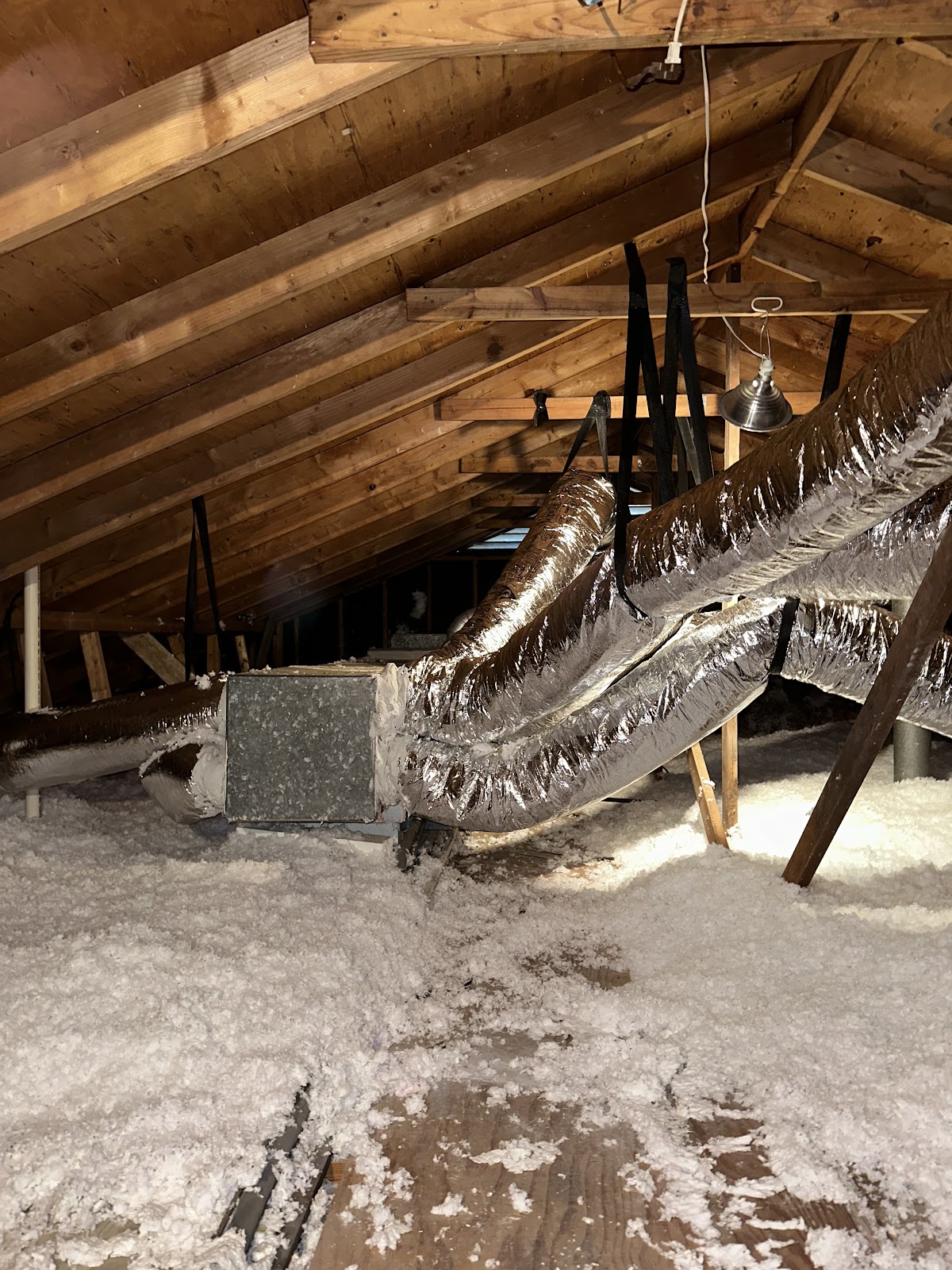
Loose-fill fiberglass is blown in using specialized equipment, filling gaps and irregular spaces better than batts. It settles slightly over time but maintains excellent R-value per inch. Most common choice for attic upgrades in Michigan.
Blown-In Cellulose
Best for: dense-pack wall insulation and attics
Made from recycled paper fiber treated with fire retardant, cellulose is a dense, effective option. It's slightly better at air sealing than fiberglass and has good environmental credentials. Excellent for sealing older attics with air leakage issues.
Batt Insulation
Best for: open wall cavities, floors over unconditioned spaces
Pre-cut fiberglass or mineral wool panels installed between joists and studs. Less effective in irregular attic spaces but ideal for wall cavities during a remodel or for basement ceilings.
Signs You Need New Insulation
Your heating or cooling bills have been creeping up year over year
Some rooms are noticeably colder or warmer than others
You notice ice dams forming on your roof in winter
Drafts are detectable near walls, floors, or ceilings
Your attic insulation is thin, compressed, or shows water damage
Pests have gotten into your attic (they love to nest in insulation)
Your home was built before 1980 and insulation has never been upgraded
Additional Benefits Beyond Energy Savings
Noise Reduction
Proper insulation dampens sound transmission between floors and from outside, making your home noticeably quieter.
HVAC Longevity
When your system doesn't have to run as hard or as long, it lasts longer and requires fewer repairs.
More Consistent Comfort
Rooms stay within a narrower temperature range throughout the day, eliminating hot and cold spots.
Pest Deterrence
Fresh dense-pack insulation leaves fewer entry points and less hospitable nesting conditions for rodents.
Our Insulation Process
- 1
Free in-home assessment — we measure your current R-value and identify air leakage points
- 2
Old insulation removal if it's damaged, compressed, or contaminated
- 3
Air sealing of penetrations and gaps before new insulation is installed
- 4
Blown-in insulation installation to meet or exceed R-49
- 5
Final measurement to confirm target R-value was achieved throughout the attic
Serving Metro Detroit
Find Out If Your Home Is Losing Heat
We offer free insulation assessments. We'll tell you exactly what R-value you have, what you need, and what the upgrade will cost — no pressure.